This can be a stressful time for soon-to-be newlyweds. Where do you even start? How do you go about it? With the fear of forgetting important details… and that your wedding day schedule will turn into a race against the clock… Take advantage of my expertiseas a wedding planner to help you see things more clearly!
How do you plan your wedding day?
A solid foundation
A well-planned schedule helps ensure that your wedding day runs smoothly. Although every wedding is different, and no two events unfold exactly the same way, there are some common elements.
I recommend starting with the ceremony schedules—which are often set in stone (town hall and/or church)—and then planning the key events leading up to them (preparations, first look) and those that follow (reception, photos, dinner…)
Duration of key moments
There are certain moments that are common to every wedding; to incorporate them effectively into your schedule, it’s important to know how long they last. Here they are:
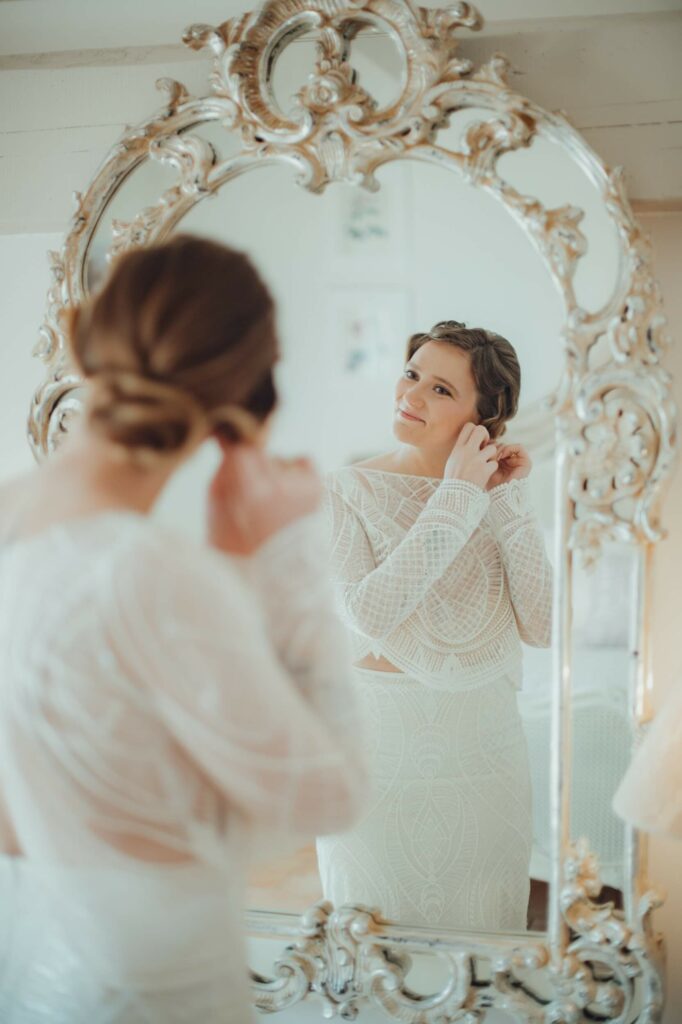
Bride's beauty treatment: 2.5 hours – yes, that's how long it takes to make you look your absolute best in a calm and welcoming setting, surrounded by your closest friends.
Getting the bride and groom ready: 30 minutes each—enough time to take some great photos with your attendants.
First look: 30 minutes – Take advantage of this little break together before the hustle and bustle of the rest of the day to get to know each other in peace and quiet, in an intimate setting, and let your emotions run free.
Civil ceremony: 30 minutes
Religious or secular ceremony: 1 hour
Group photos: 30 minutes – provided that everything is properly arranged in advance and the number of groups is limited to about 10
Couple photos: 20 minutes—a well-deserved break to give you a few moments to reconnect and capture your union and all the emotions it evokes
Reception: 2 p.m.
A typical wedding timeline in 12 key moments
To ensure a smooth wedding day where you can enjoy every moment, here is the schedule I recommend. It is based on a civil ceremony followed by a religious or secular celebration, with travel times not exceeding 30 minutes. You can therefore adjust it to suit your own schedule.
10:00 a.m. | Bridal makeup and hair
1:00 p.m. | The bride and groom get dressed with their attendants
2:00 p.m. | First Look
3:30 p.m. | Civil Ceremony
5:00 p.m. | Religious or Secular Ceremony
6:00 p.m. | Group photos
6:30 p.m. | Reception
8:30 PM | Couple photos during golden hour – guests take their seats in the ballroom
9:00 p.m. | The bride and groom make their entrance
9:15 p.m. | Dinner
11:30 p.m. | Wedding Cake
12:00 a.m. | Opening dance and evening event
Mistakes to Avoid for a Stress-Free Wedding Day
Losing guests due to too many activities
Brides and grooms often worry that their guests will get bored, so they end up overloading the schedule with too many activities: live music, a cocktail bar, a tattoo booth, board games, a photo booth, an audio guestbook… The result is that no one ends up enjoying any of it. It’s better to focus on two well-curated wedding activities that will capture your guests’ attention and get them involved.
Don't leave any room for flexibility
It’s important to remember that every event comes with its share of setbacks and surprises. Travel times, which are often underestimated, can quickly make for a long day. Moving a group of 100 people isn’t as easy as it sounds! For example, it can take 30 minutes just to get everyone settled in the dining room for dinner! I recommend building in 15-minute buffers at various points throughout the day to help ease the pressure.
In addition, your loved ones have likely prepared a few surprises for you, such as entertainment or speeches. Ideally, you should at least know how many there are and how long they’ll last so you can work them into your schedule; that way, you won’t risk getting overwhelmed. You can entrust this task to a best man or, even better, a wedding planner who can coordinate with the DJ. Planning every moment well in advance ensures a smooth-running day that you can fully enjoy!
Taking on the burden of wedding planning all by yourself
I always tell my couples: on your wedding day, there are no watches or phones. Let the professionals take the lead, and savor every moment to the fullest. To make this happen, share the wedding day schedule with each vendor in advance. You can also appoint a close friend or family member to ensure everything runs smoothly. Or better yet, hire a wedding planner to coordinate the big day. She will have worked with you on the schedule and checked every detail. On the big day, you can fully rely on her presence and not worry about the timing or the countless details that need to be checked. I invite you to take a look at my page dedicated to this service.
In conclusion...
When it comes to your wedding, a well-defined and detailed schedule isn’t a constraint—it’s actually a reassuring framework. It gives you the peace of mind that you won’t miss a single step and will avoid any unnecessary stress.
Don't wait—start planning your wedding day schedule! You'll feel so much more at ease!
If you need help, don’t wait—get in touch today! Your wedding’s success won’t wait!